
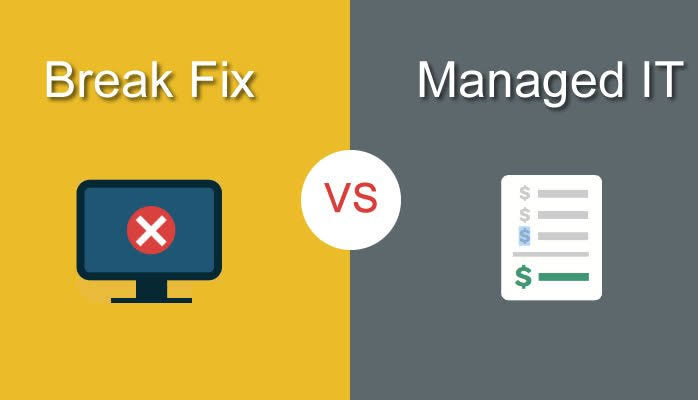
Break-fix IT support can work well for a small business in its early stages. Something goes wrong, you call an IT provider, they fix it, and you receive an invoice.
Simple enough.
But as your business grows, technology becomes more critical to your day-to-day operations. Employees depend on computers, cloud applications, networks, phones, and cybersecurity tools to get their jobs done. At that point, waiting for something to break before addressing it can become expensive and disruptive.
So how do you know when you’ve outgrown break-fix IT?
Here are five signs it’s time to consider managed IT services.
1. IT Problems Are Interrupting Your Business
If employees regularly lose time because of computer problems, network issues, software failures, or other technology headaches, you’re already paying for IT support—you may just be paying for it through lost productivity.
One employee losing an hour because of an IT problem might not seem significant. Multiply that across several employees and several incidents a month, and the cost can become substantial.
Break-fix support is reactive by design. Something goes wrong, you call, and the provider responds.
Managed IT services take a different approach. Your IT environment is monitored and maintained proactively, with the goal of identifying potential problems before they become major disruptions.
The goal isn’t simply to fix problems faster.
It’s to prevent as many problems as possible in the first place.
2. You’re Tired of Being Surprised by Your IT Costs
One month your IT bill might be relatively small. The next month, a server problem, emergency visit, or unexpected hardware replacement can produce a much larger bill.
That unpredictability can make IT budgeting difficult.
With managed IT services, you typically pay a fixed monthly fee for an agreed-upon set of services. Instead of wondering how much the next IT emergency is going to cost, you have a predictable technology expense that can be incorporated into your monthly operating budget.
That’s particularly valuable for growing businesses.
A predictable IT budget makes it easier to plan for other expenses, forecast cash flow, and make technology investments based on your business needs rather than whatever happens to break that month.
Of course, hardware, software licenses, projects, and other expenses may be separate depending on your agreement. But your core IT support costs become far more predictable.
3. Your Business Is Growing—and You Need IT to Keep Up
Growth is exciting.
Your IT infrastructure? Not always.
Adding employees, opening locations, adopting new software, supporting remote workers, or moving more operations to the cloud can quickly make an informal IT environment difficult to manage.
Maybe new employees don’t have everything they need on their first day. Maybe nobody has a consistent process for removing access when someone leaves. Maybe computers are replaced only after they fail.
These are signs that IT needs to become more strategic.
A managed IT provider can help standardize technology, plan hardware replacements, manage users and devices, and make sure your IT environment is prepared for where the business is going—not just where it is today.
4. Cybersecurity Is Becoming Too Important to Handle Reactively
Cybersecurity is another area where waiting for something to go wrong isn’t a particularly good strategy.
A business doesn’t want to discover that its backups weren’t working after ransomware encrypts its files.
As your company grows, you may have more employees, devices, cloud applications, remote workers, and sensitive information. Each can introduce additional security risks.
A proactive IT strategy can include services such as patch management, endpoint protection, multifactor authentication, backup monitoring, security awareness training, and ongoing security assessments.
No IT provider can guarantee that a business will never experience a cyberattack. But proactive management can reduce risk and improve your ability to respond when something does happen.
5. You Realize Your Break-Fix Provider Isn’t Your Priority Client
This is one of the biggest differences between break-fix and managed IT services.
When you use an IT company on a break-fix basis, you’re generally calling when you have a problem. The provider may have other clients experiencing problems at the same time.
That means your emergency is competing with someone else’s emergency.
Managed service clients are typically given priority because the MSP has a vested interest in keeping their clients’ IT environments running smoothly.
It’s a different relationship.
The MSP isn’t simply waiting for the phone to ring. They’re responsible for proactively managing the client’s technology, monitoring systems, addressing potential problems, and maintaining the environment.
From the MSP’s perspective, preventing an outage isn’t just good customer service—it’s good business.
The better the client’s IT environment performs, the fewer emergencies everyone has to deal with.
That creates an alignment of interests that you simply don’t get in the same way with traditional break-fix support.
The Real Difference: Reactive vs. Proactive IT
Break-fix IT isn’t necessarily wrong for every business. For a very small company with limited technology needs, it may still make sense.
But when technology becomes critical to your operations, the risks of a reactive approach become harder to ignore.
With break-fix, the question is:
“What broke?”
With managed IT, the question becomes:
“What can we do to keep it from breaking?”
That’s a significant difference.
You get proactive maintenance, more predictable costs, better planning, and an IT partner whose interests are aligned with keeping your business running.
And perhaps most importantly, you get to spend less time worrying about technology and more time running your business.
Has Your Business Outgrown Break-Fix IT?
If IT problems are disrupting your employees, your technology costs are unpredictable, cybersecurity is becoming a bigger concern, or you’re simply tired of calling someone every time something breaks, it may be time to consider managed IT services.
Data Troop helps businesses take a proactive approach to IT—keeping technology secure, reliable, and aligned with business goals.
We can review your current IT environment, identify potential risks and inefficiencies, and help you determine whether managed IT services make sense for your business.
Contact Data Troop today to find out if your business has outgrown break-fix IT support.